Learning Design

Support Foundations

A gamified new hire onboarding program that turned compliance-heavy support fundamentals into an engaging, behavior-changing learning experience, built for a fully distributed team under pandemic conditions.

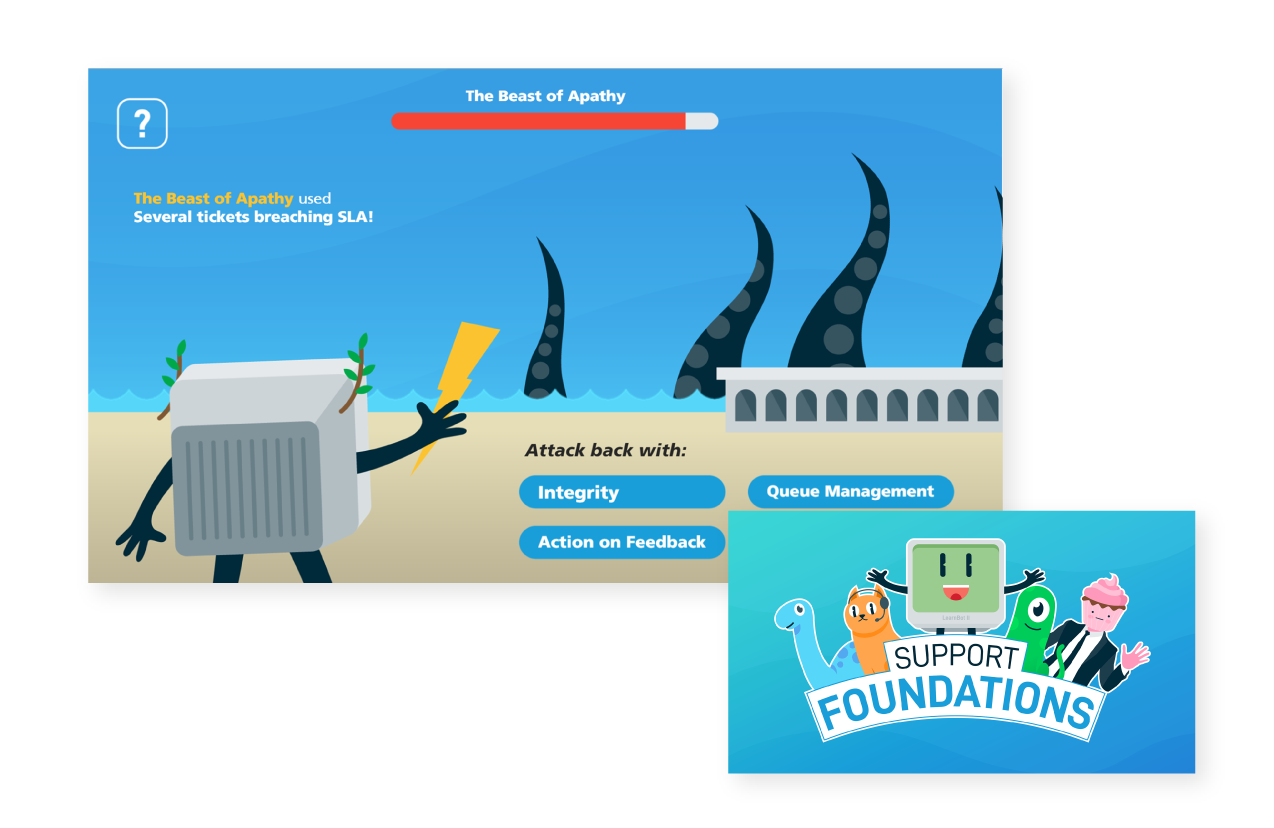
Support Foundations game preview

Enter password to view

Get in touch to request access

Designing for behavior change, not just completion

Company Datto
Scope Support Onboarding
Role Instructional Designer & Illustrator
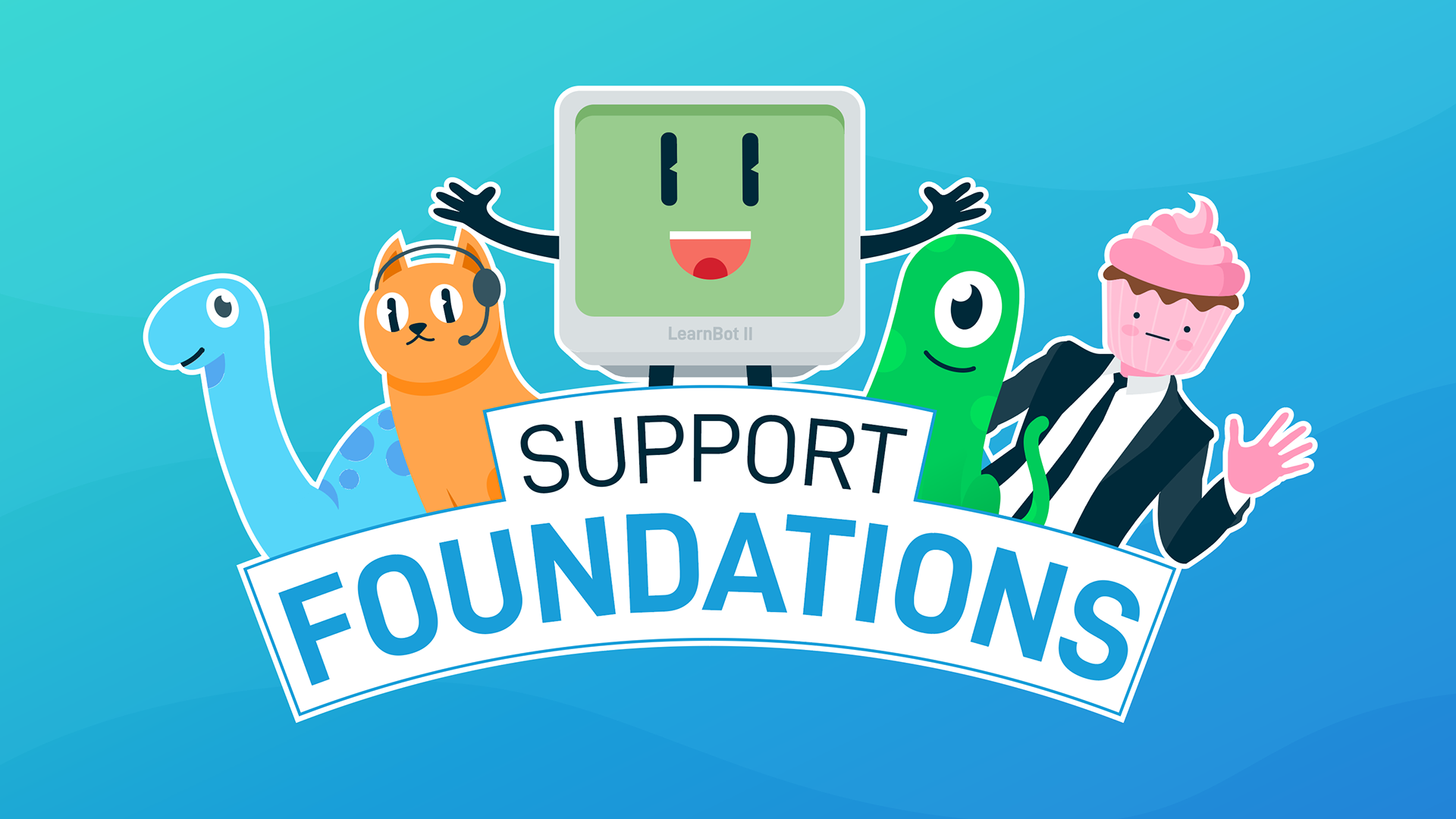
Support Foundations program identity

Support Foundations was a three-week new hire onboarding curriculum designed to teach incoming Datto Support Technicians the foundational knowledge, skills, and behaviors they'd need to perform in the role. The program spanned soft skills and technical troubleshooting across five core competency areas, but the goal was never just coverage. It was ensuring that what technicians learned in training actually showed up in how they worked.

I was an active contributor across all phases of development, and served as the primary resource for visual design and illustration throughout the program.

01

Training that didn't stick

Datto support technician onboarding context

Traditional compliance-style training had a predictable failure mode: high completion, low retention, and little visible impact on how people actually behaved on the floor. New Datto Support Technicians were arriving with inconsistent baseline knowledge and no structured path for internalizing the behaviors the role required.

Compounding the design challenge: the program was originally scoped as a primarily instructor-led experience. When the COVID-19 pandemic shifted the entire team to remote work, the curriculum had to be redesigned from scratch, transitioning to distance learning over Zoom without losing the interactivity and engagement that make onboarding actually effective.

The question wasn't just what to teach. It was how to make it land in a fully virtual environment, with brand-new hires who'd never set foot in an office together.

02

Gamification built around real competencies

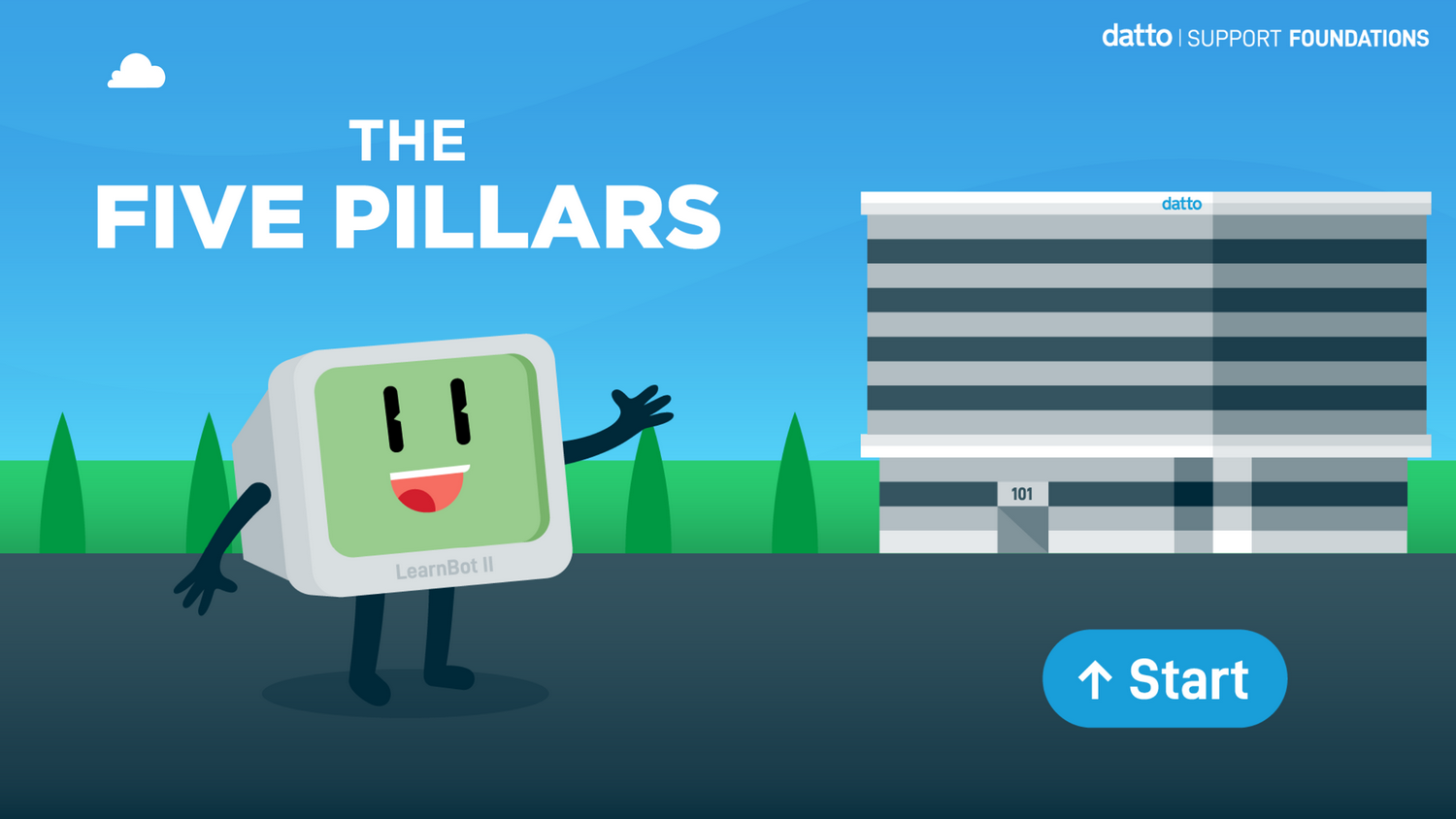
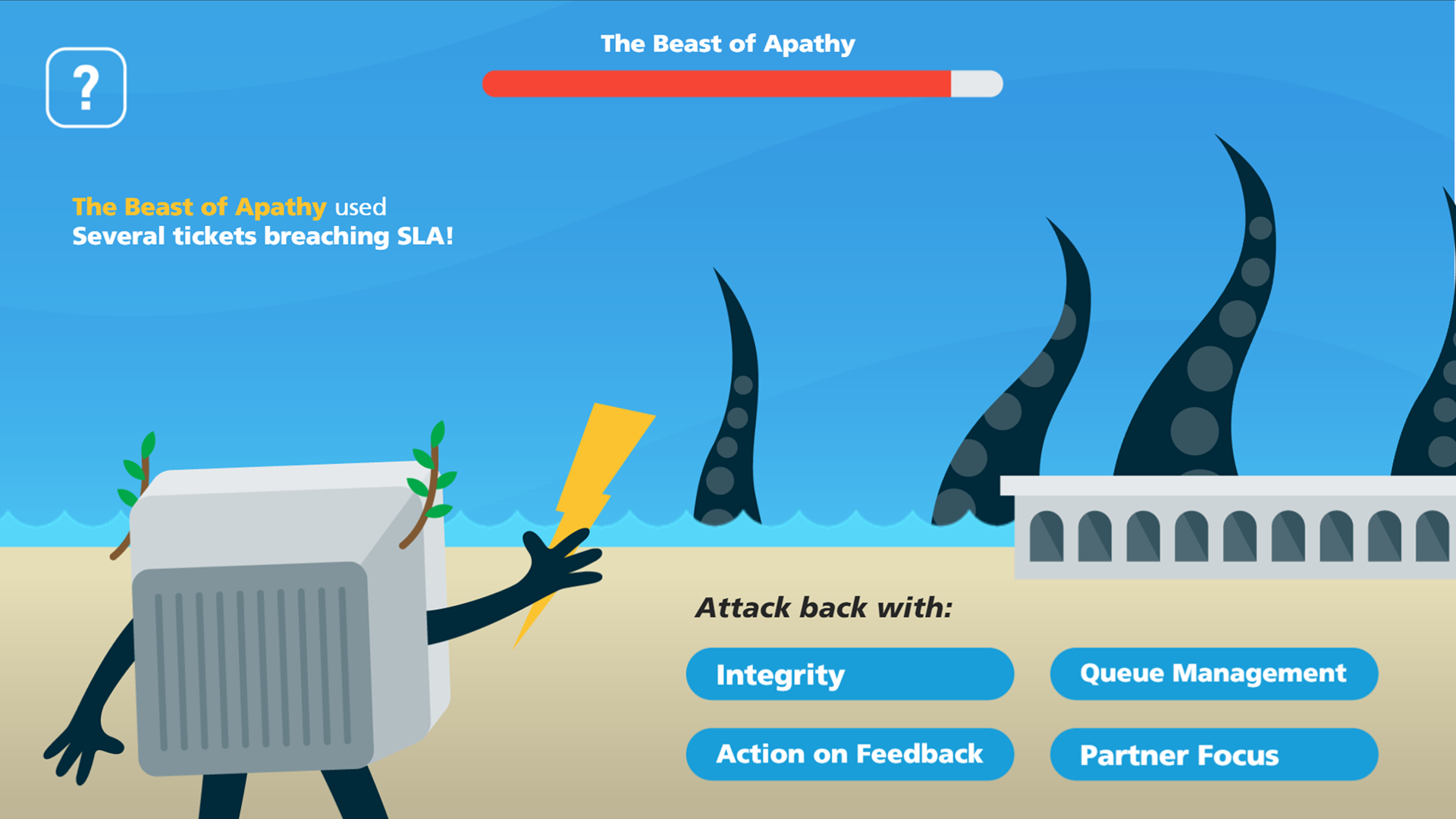
The Five Pillars eLearning: flagship interactive module Beast of Apathy: the RPG-style boss-fight quiz

Working alongside Support Leadership stakeholders and subject matter experts, I helped scope the program content areas through a structured needs assessment, identifying the knowledge and skills that meaningfully differentiated strong performers from those who struggled.

The design philosophy was intentional: evergreen knowledge content (concepts, mental models, frameworks) went into interactive eLearning modules that technicians could engage with independently. Skill-building and practical application were reserved for instructor-led sessions, where scenario-based practice could happen in real time with peer feedback.

The flagship eLearning, The Five Pillars, introduced technicians to the five competency areas they'd be evaluated on throughout their careers. To make that genuinely engaging rather than a checkbox exercise, we built it as a heavily gamified, story-driven experience: a protagonist (LearnBot II) navigating a world where real support failure modes like apathy, SLA breaches, and escalation traps were visualized as monsters to defeat.

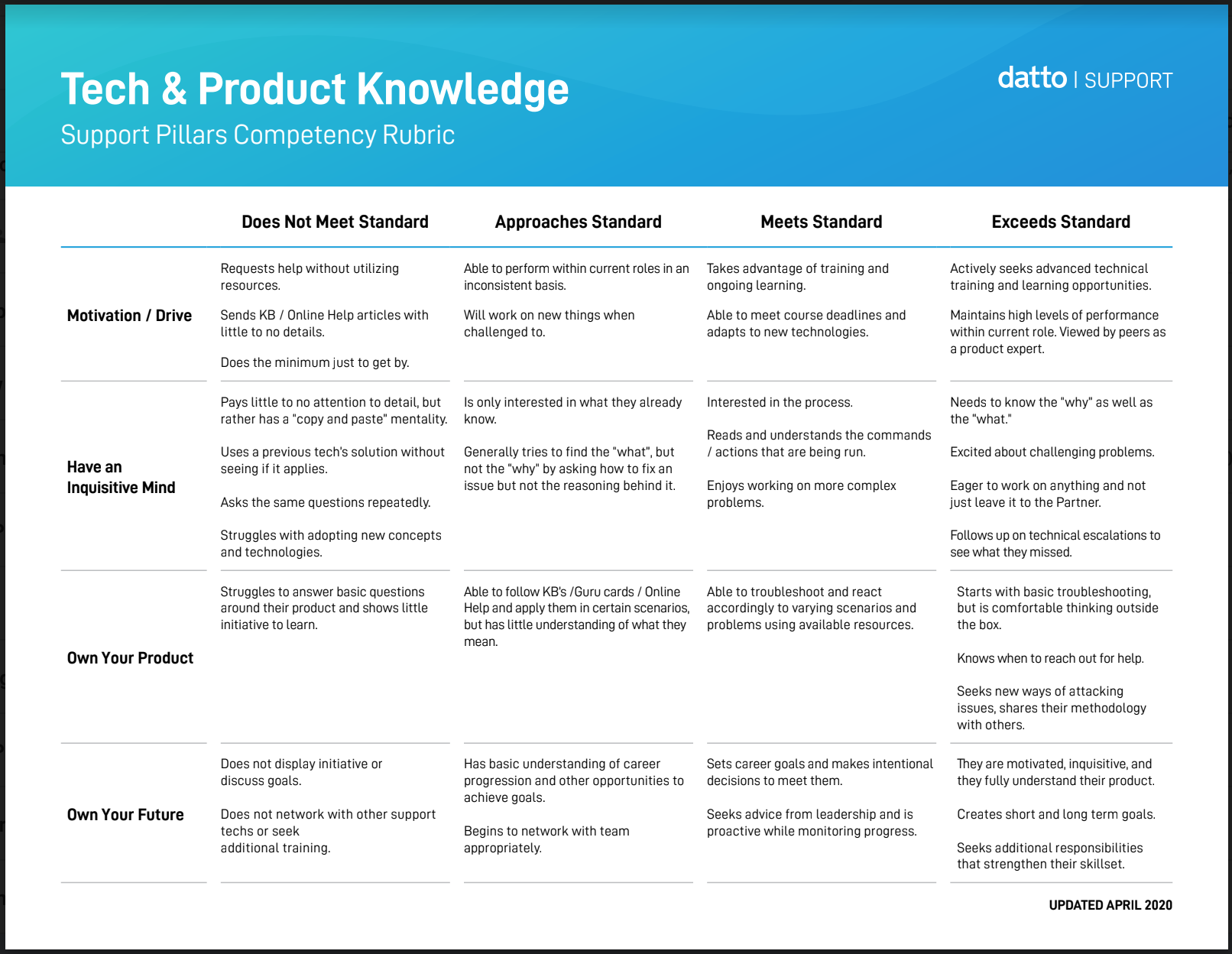
The boss-fight quiz at the end of the module was custom-programmed in Articulate Storyline, drawing directly from classic RPG combat sequences. Technicians didn't just answer questions; they fought the Beast of Apathy using the five pillars as their attacks. Post-training, competency rubrics were made available and used in the classroom for peer evaluation exercises, giving technicians a concrete, objective framework for assessing performance before they ever hit the live queue.
03

A curriculum, a system, and a credential worth earning

Competency rubric used for peer evaluation exercises

The curriculum architecture was scoped with Support Leadership and subject matter experts via a structured needs assessment, and the program was deliberately modular, separating knowledge transfer into async eLearning from skill-building into live, instructor-led sessions. That split kept each surface focused on what it does best, and made the whole experience easier to maintain and evolve.

At the center of the program sat The Five Pillars eLearning: a gamified, story-driven module storyboarded in Adobe Illustrator and developed in Articulate Storyline, complete with a custom RPG-style boss-fight quiz mechanic programmed from scratch. Around it, I produced original character design, environment illustration, and animation, all building a cohesive visual system that felt distinctive from standard corporate training aesthetics.

Underpinning the experience were competency rubrics made available post-training for use in peer assessment exercises, connecting the gamified learning back to real performance standards. When the pandemic forced a full pivot from ILT to virtual delivery over Zoom, the program was rebuilt to preserve the interactivity and scenario-based practice that made it effective in the first place.

Onboarding that earned its completion rates

90%
Completion rate across all cohorts
5
Core competency areas mapped to real performance behaviors
3 wk
End-to-end onboarding curriculum, redesigned for remote delivery

Successfully launched a three-week onboarding program under pandemic conditions. redesigned for virtual delivery without sacrificing the engagement that makes onboarding actually stick. Established a reusable competency framework and evaluation rubric that extended beyond onboarding into ongoing performance management.

Rigor and creative ambition aren't in tension

The program demonstrated something that's easy to say but hard to execute: that rigorous instructional design and genuine creative ambition aren't in tension. Sometimes the most effective training is also the most memorable.

Next case study
Art & Design

Get in touch

Or reach out on LinkedIn