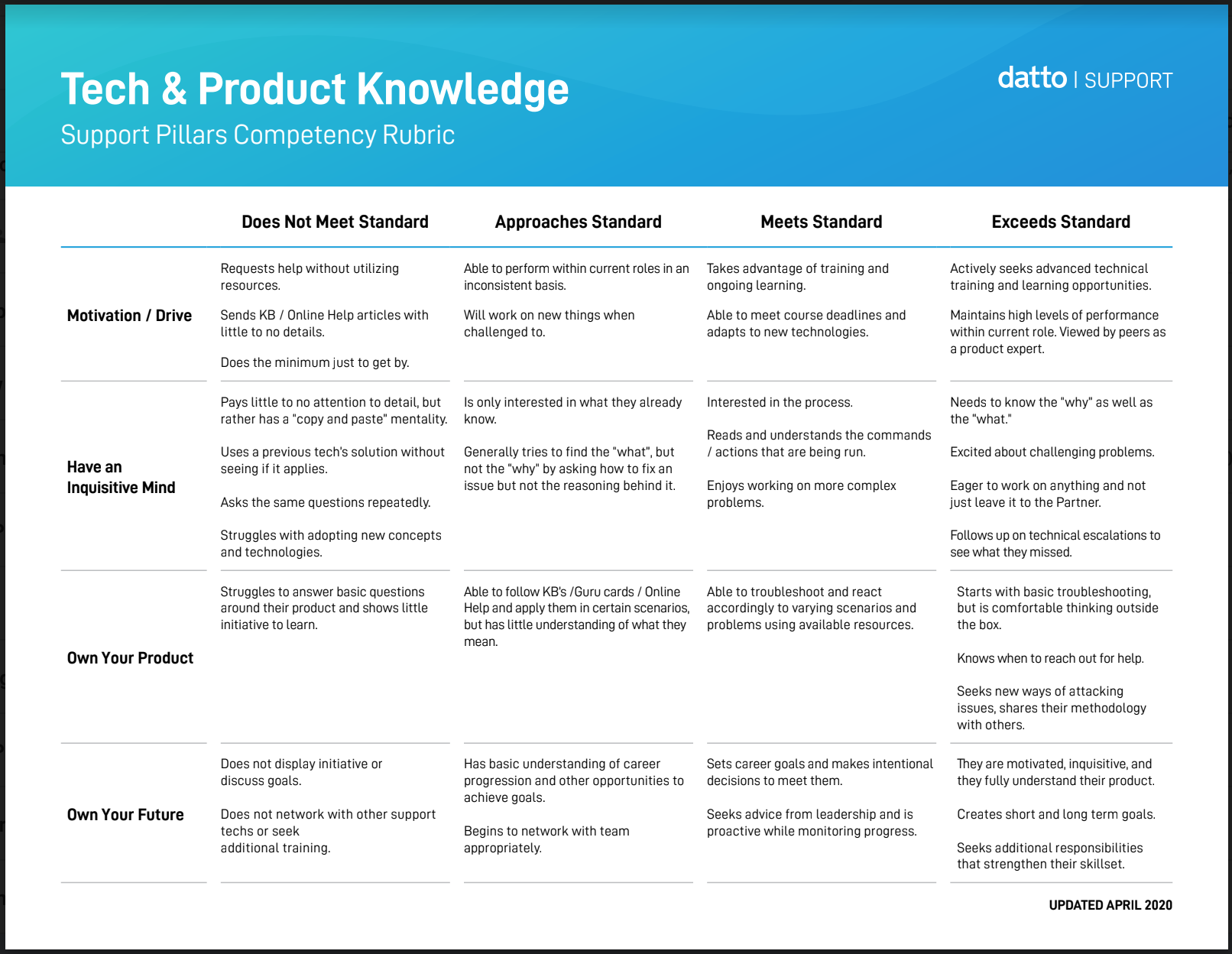
Working alongside Support Leadership stakeholders and subject matter experts, I helped scope the program content areas through a structured needs assessment, identifying the knowledge and skills that meaningfully differentiated strong performers from those who struggled.
The design philosophy was intentional: evergreen knowledge content (concepts, mental models, frameworks) went into interactive eLearning modules that technicians could engage with independently. Skill-building and practical application were reserved for instructor-led sessions, where scenario-based practice could happen in real time with peer feedback.
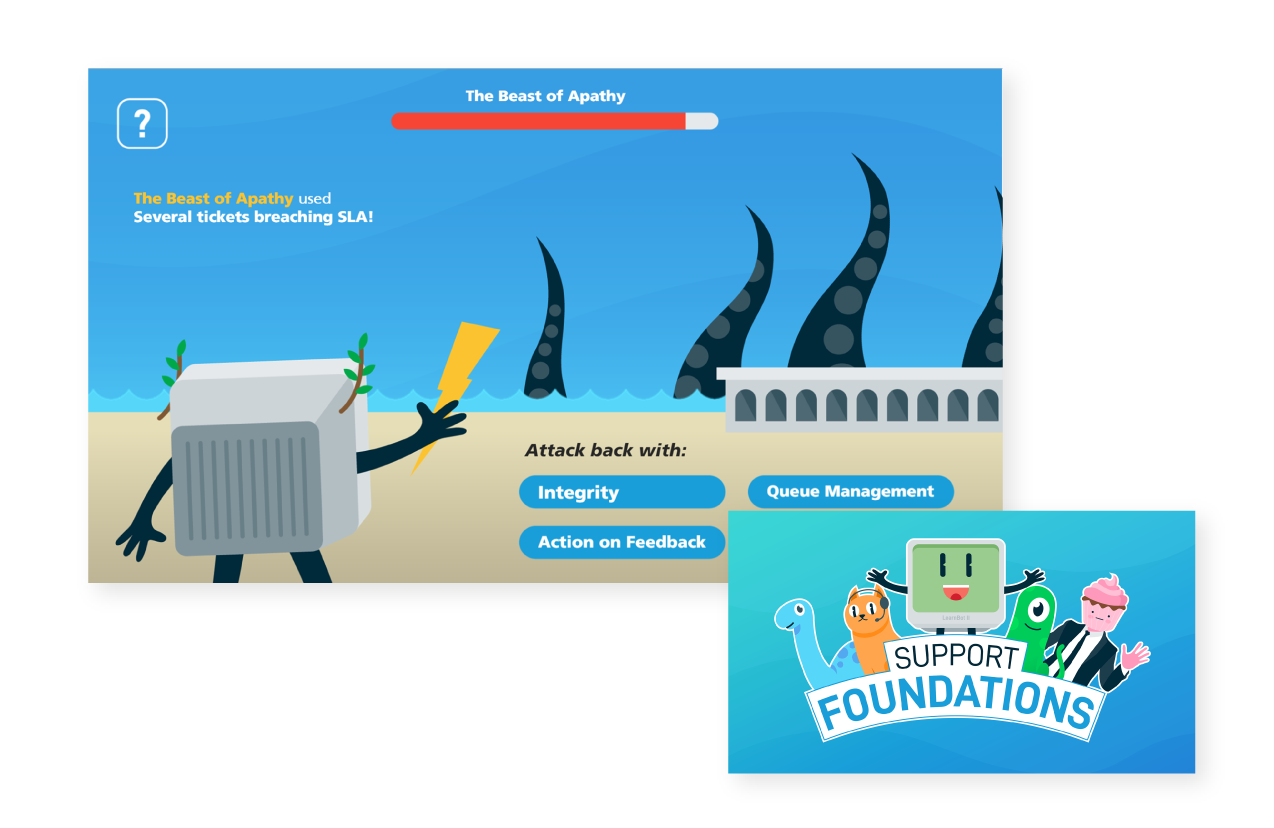
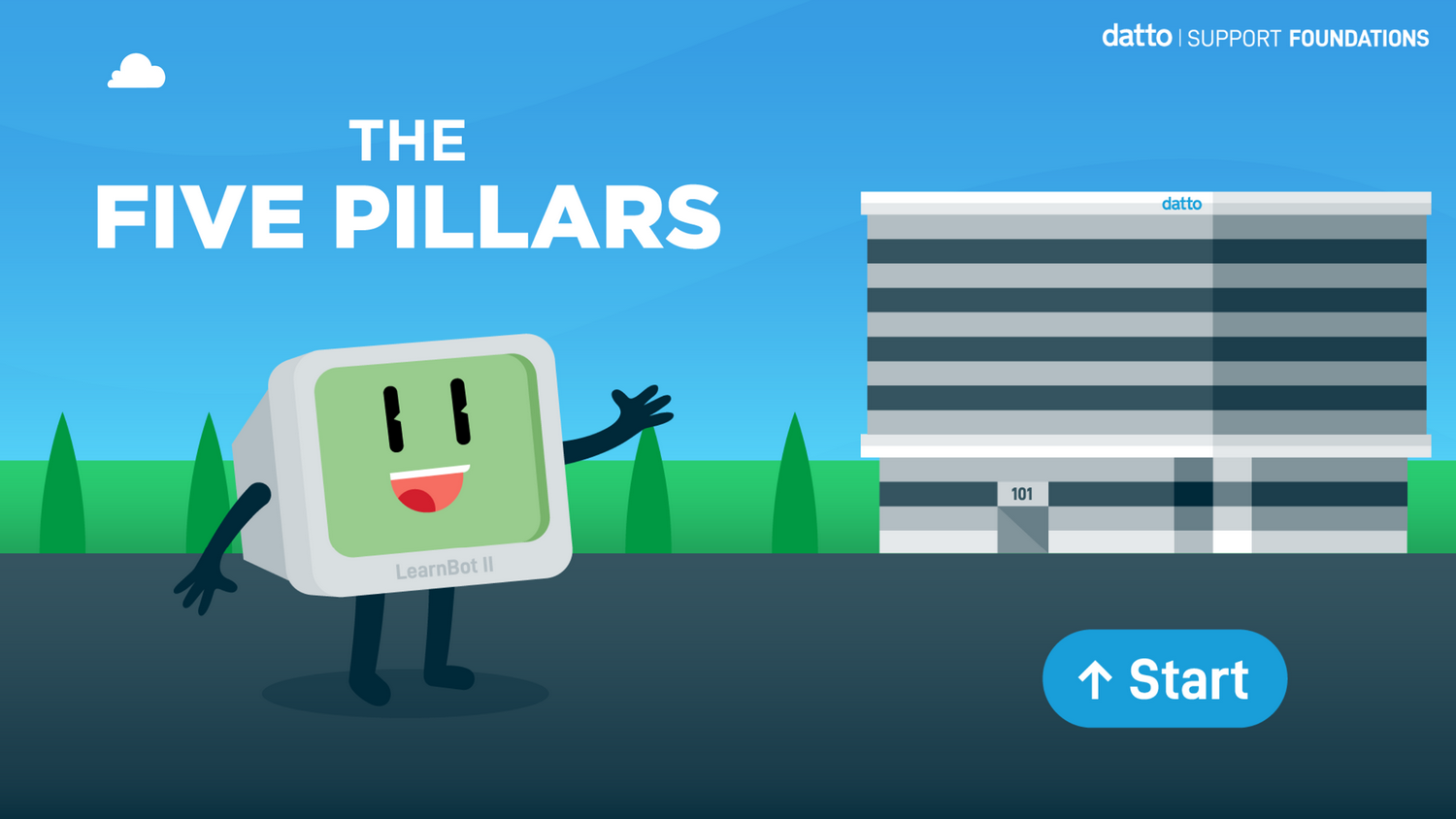
The flagship eLearning, The Five Pillars, introduced technicians to the five competency areas they'd be evaluated on throughout their careers. To make that genuinely engaging rather than a checkbox exercise, we built it as a heavily gamified, story-driven experience: a protagonist (LearnBot II) navigating a world where real support failure modes like apathy, SLA breaches, and escalation traps were visualized as monsters to defeat.
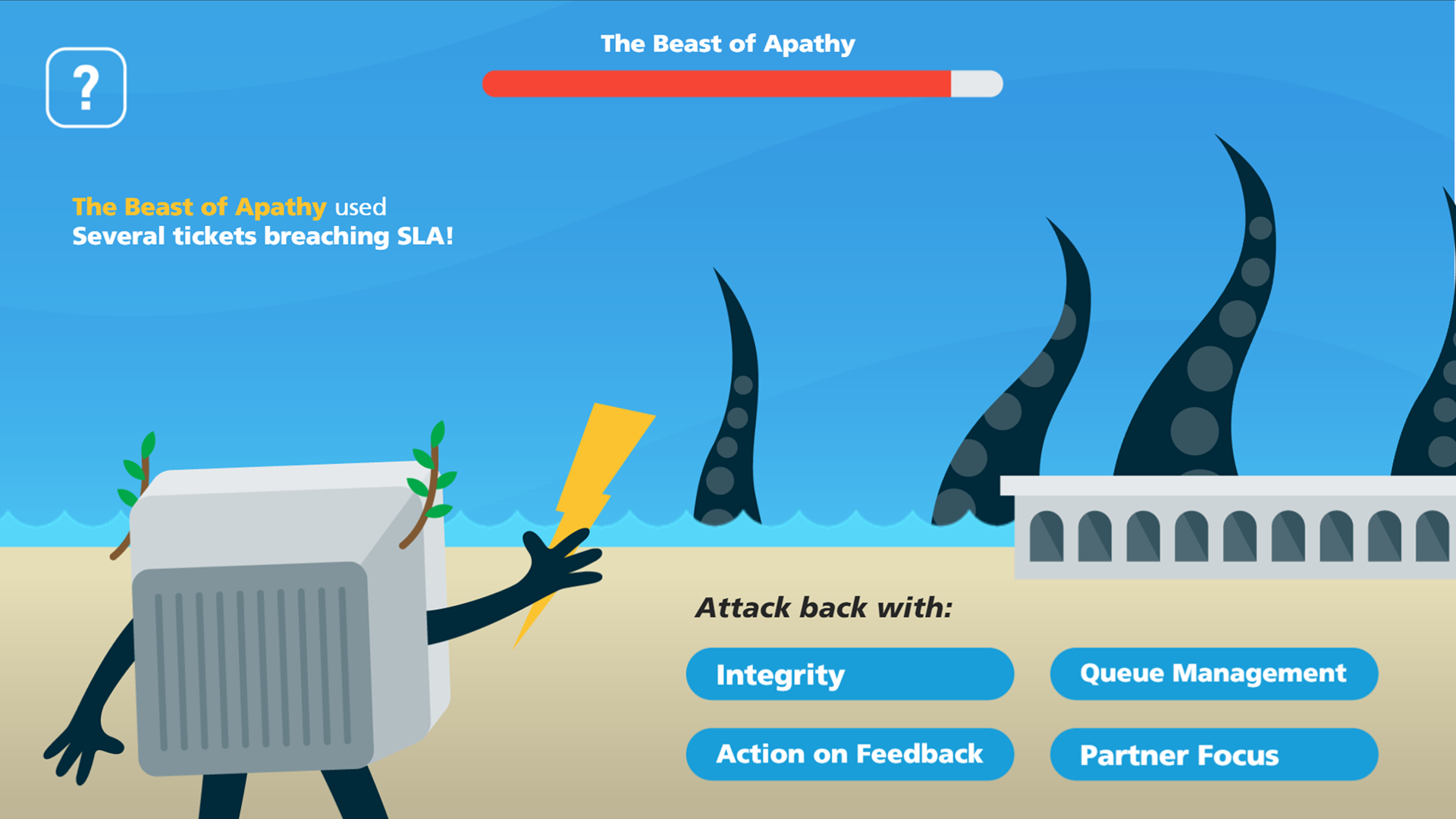
The boss-fight quiz at the end of the module was custom-programmed in Articulate Storyline, drawing directly from classic RPG combat sequences. Technicians didn't just answer questions; they fought the Beast of Apathy using the five pillars as their attacks. Post-training, competency rubrics were made available and used in the classroom for peer evaluation exercises, giving technicians a concrete, objective framework for assessing performance before they ever hit the live queue.